| Color Code | | International Diplomacy, Treaties, etc. | | Battles | | Naval Engagements | | Miscelaneous Highlights | | American Politics, Posturing, and Rioting | | British Politics, Posturing, and Rioting | | Military Milestones | | Native American Conflicts |
|
| 1763/2/10 | The Treaty of Paris gives all French territory in North America east of the Mississippi to Great Britain and west of the Mississippi to Spain. |
| 1763/5/9 | Pontiac leads allied Indian tribes against Fort Detroit. |
| 1763/8/5 | British forces defeat an Indian ambush at the Battle of Bushy Run, a major turning point in Pontiac’s War. |
| 1763/10/7 | Royal Proclamation of 1763 sets the boundaries of Britain’s new possessions and bars the colonies from western expansion. Washington and other colonists are infuriated. |
| 1764/9/21 | The Sugar Act of 1764 reduces taxes but increases enforcement efforts. |
| 1764/8/12 | Delaware and Shawnee tribes sign a treaty with the British. |
| 1764/4/19 | The Currency Act of 1764. |
| 1764/10/17 | British and Indian representatives meet to discuss terms of peace. |
| 1764/10/25 | John Adams marries Abigail Smith. |
| 1764/11/3 | The House of Representatives of #Massachusetts Bay petitions the King. |
| 1764/12/5 | Pontiac’s War is officially ended. |
| 1765/3/22 | The Stamp Act of 1765. |
| 1765/3/24 | The Quartering Act of 1765 commandeers private property for housing British soldiers. |
| 1765/5/29 | Virginia House of Burgesses passes Virginia Resolves in opposition to taxation without representation. |
| 1765/5/29 | Speaking in favor of the Virginia Resolves, Patrick Henry says “If this be treason, make the most of it!” |
| 1765/8/14 | A mob attacks the home of the Massachusetts Distributor of Stamps. |
| 1765/8/26 | Rioters destroy homes of several British government officials in #Boston, #Massachusetts. |
| 1765/10/7 | The Stamp Act Congress commences. |
| 1765/10/19 | Stamp Act Congress adopts Declaration of Rights and Grievances. |
| 1765/10/25 | The Stamp Act Congress ends. |
| 1766/1/4 | Ben Franklin urges the inhabitants of Chancery Lane to leave the street unpaved in order to discourage frivolous lawsuits. |
| 1766/2/13 | Benjamin Franklin compares the relationship between Britain and the Colonies to an abusive marriage. |
| 1766/3/1 | Benjamin Franklin on hearing of the way his detractors spoke of him when he wasn’t around: “I give myself as little Concern about them as possible. I have often met with such Treatment from People that I was all the while endeavouring to serve. At other times I have been extoll’d extravagantly when I have had little or no Merit. These are the Operations of Nature. It sometimes is cloudy, it rains, it hails; again ’tis clear and pleasant, and the Sun shines on us. Take one thing with another, and the World is a pretty good sort of a World; and ’tis our Duty to make the best of it and be thankful.” |
| 1766/3/18 | Stamp Act is repealed by Parliament and the King. |
| 1766/3/18 | Declaratory Act asserts the right of Parliament to make laws for the colonies. |
| 1766/5/21 | The Liberty Pole is erected in New York City in celebration of the repeal of the Stamp Act. |
| 1767/6/29 | The Revenue Act of 1767, the first of the Townsend Acts, is passed. |
| 1768/2/11 | Samuel Adams writes the #Massachusetts Circular Letter calling the Townsend Acts unconstitutional. |
| 1768/5/9 | John Hancock’s men lock a customs official in the cabin of the sloop Liberty while they unload cargo. |
| 1768/5/17 | British frigate HMS Romney arrives in Boston Harbor to intimidate tax protestors. Captain Corner attempts to impress Boston sailors into his crew. |
| 1768/6/5 | In early June Bostonians riot when Hancock’s sloop Liberty is seized for nonpayment of customs. |
| 1768/7/12 | Governor of Massachusetts dissolves the general court after the legislature refuses to revoke Adams’ letter. |
| 1768/8/1 | Boston Non-Importation Agreement made by Boston and New York merchants to boycott British goods. |
| 1768/10/1 | British troops occupy Boston. |
| 1769/1/17 | Ben Franklin writes in defense of patriotic Americans seeking public office under the current, corrupt government. |
| 1769/5/29 | George Washington introduces George Mason’s proposal in the #Virginia house of Burgesses to boycott British goods until the Townsend Acts are repealed. |
| 1769/9/2 | Benjamin Franklin warns against the dangers of “law enforcement” antagonizing an already hostile people: “When I consider the warm resentment of a people who think themselves injured and oppressed, and the common insolence of the soldiery, who are taught to consider that people as in rebellion, I cannot but fear the consequences of bringing them together.” |
| 1769/11/29 | Benjamin Franklin informs William Strahan, printer to the King, of the American hostility toward taxation without representation. |
| 1769/12/16 | Alexander McDougall and the Sons of Liberty publish “To the Betrayed Inhabitants of the City and Colony of New York”. |
| 1770/1/19 | A riot known as the Battle of Golden Hill erupts when British soldiers post handbills attacking the Sons of Liberty. |
| 1770/1/28 | Frederick North, Lord North, becomes Prime Minister of Great Britain. |
| 1770/3/5 | The Boston Massacre helps set the stage for the American Revolution. |
| 1770/3/5 | London merchants petition Parliament to repeal heavy taxes on trade with New England. |
| 1770/7/9 | New York merchants agree not to import anything from Britain that was subject to import duties. |
| 1770/11/8 | In the London Chronicle Benjamin Franklin describes the many reasons for America’s increasing discontent. |
| 1771/1/16 | Ben Franklin recounts a demonstration of why the American colonies can get no satisfaction to their grievances from London. |
| 1771/5/16 | Governor William Tryon puts down a tax rebellion at the Battle of Alamance, North Carolina. |
| 1771/5/17 | Ben Franklin urges patience on the Massachusetts House of Representatives despite the apparent inevitability of open conflict. |
| 1771/6/9 | The British revenue schooner Gaspee is boarded and burned off the coast of Rhode Island by American colonists in protest of high British taxes. |
| 1771/11/2 | Samuel Adams organizes the Committees of Correspondence. |
| 1772/5/5 | Watauga Association leases land, from the Cherokee, along the Watauga River in Tennessee and declares independence in May, 1774. |
| 1772/6/3 | A New Englander lays out American objections to the enforcement of the state religion in the colonies. |
| 1772/11/20 | Boston Committee of Correspondence approves the “Boston Pamphlet” detailing a number of grievances against Parliament and the Crown. |
| 1773/5/10 | The Tea Act of 1773 attempts to force the American colonies to purchase British East India Company tea. |
| 1773/6/13 | In June, 1773, The private letters of Massachusetts Governor Thomas Hutchinson and Lieutenant Governor Andrew Oliver, discussing how to deal with the ongoing tax protests during the 1760s, are published in the Boston Gazette. Benjamin Franklin later admits responsibility. |
| 1773/12/15 | The local Sons of Liberty publish Association of the Sons of Liberty in New York. |
| 1773/12/16 | The Boston Tea Party. The Sons of Liberty destroy a shipment of East India Company tea in protest of unfair taxes and import rules. |
| 1773/12/25 | Ben Franklin admits to releasing the Hutchinson Letters. Merry Christmas, governor! |
| 1774/1/29 | Benjamin Franklin is questioned by Parliament. |
| 1774/4/10 | Benjamin Franklin writes of flames on the New Jersey rivers. |
| 1774/5/23 | Lord Dunmore’s War begins between Virginia and the Shawnee and Mingo tribes in May, 1774. |
| 1774/3/10 | Benjamin Franklin warns Britain that continued offenses against the rights of American colonists will likely lead to war. |
| 1774/3/31 | The Boston Port Act legally blockades Boston until reparations are made for the Boston Tea Party. |
| 1774/5/13 | Boston Town Meeting passes a resolution to boycott British goods in response to the Boston Port Act. |
| 1774/5/20 | The Administration of Justice Act allows the state to try an accused in a venue distant from the crime. |
| 1774/5/20 | The Massachusetts Government Act voids the colony charter and gives the royal governor greater power. |
| 1774/6/1 | Virginia House of Burgesses declares June 1, 1774, to be a day of fasting, humiliation, and prayer. |
| 1774/6/1 | The Boston Port Bill of 1774 takes effect, legally closing off Boston to all shipping. |
| 1774/6/2 | The Quartering Act of 1774 allows colonial governors to commandeer private buildings to house troops. |
| 1774/6/22 | The Quebec Act of 1774 establishes rules for governing Quebec and angers the English colonists. |
| 1774/6/29 | Benjamin Franklin publishes the satirical “Act for the More Effectual Keeping of the Colonies Dependent” in the Pennsylvania Journal. |
| 1774/7/18 | The Fairfax Resolves are adopted by Fairfax County, Virginia, rejecting Parliament’s claims of authority over the colonies. |
| 1774/7/23 | Thomas Jefferson and John Walker ask the Parish of Saint Anne to spend the day in prayer and fasting to avert the dangers which threaten civil rights and all the evils of civil war. |
| 1774/9/1 | General Thomas Gage raids a powder magazine in Cambridge, putting colonial militias on high alert. |
| 1774/9/5 | First Continental Congress commences in Philadelphia. |
| 1774/10/19 | Lord Dunmore’s War ends with the Treaty of Camp Charlotte. |
| 1774/10/26 | First Continental Congress ends. |
| 1774/10/14 | First Continental Congress issues the Declaration and Resolves. |
| 1774/10/19 | The HMS Peggy Stewart is burned. |
| 1774/10/20 | Continental Congress creates the Continental Association to coordinate boycotts of British goods. |
| 1774/10/26 | Massachusetts Provincial Congress creates the Committees of Safety and Supplies with power to call up the militia in an emergency. The Congress also calls for a reorganization of the militia into “minute companies” including more deliberate, regular training. |
| 1774/10/26 | Continental Congress issues a petition to King George III calling for a repeal of the Coercive Acts. |
| 1774/12/22 | In an incident known as the Greenwich Tea Party, forty patriots from Greenwich, New Jersey, dress as Indians and burn a cargo of tea bound for Philadelphia. |
| Color Code | | International Diplomacy, Treaties, etc. | | Battles | | Naval Engagements | | Miscelaneous Highlights | | American Politics, Posturing, and Rioting | | British Politics, Posturing, and Rioting | | Military Milestones | | Native American Conflicts |
|
| 1775/1/3 | Captain Isaac Sears mandhandles and mocks John Case, an older British loyalist. |
| 1775/1/4 | The Governor of Connecticut calls an emergency meeting to discuss plans for equipping and training the militia. |
| 1775/1/11 | The Provincial Congress of South Carolina shuts down the civil court and begins an extended, emergency session. |
| 1775/1/11 | The people of Marblehead, Massachusetts, resolve to form a militia and begin training in the art of war. |
| 1775/1/20 | An altercation between a British officer and a number of Boston patriots has two very different versions. |
| 1775/1/25 | The Pennsylvania Journal publishes a letter excoriating collaborators and placing all blame for the coming revolution on their heads. |
| 1775/2/2 | In support of the Continental Congress, a group of New Yorkers prevent the Ship James from unloading its cargo. |
| 1775/2/5 | A party of militia raid an informer’s house in Stamford, Connectictut, and take back seven half-barrels of confiscated gun powder. |
| 1775/2/7 | Ben Franklin argues that American men are better with the ladies than English or Scottish men. |
| 1775/2/27 | Parliament approves Lord North’s Conciliatory Resolution, commonly referred to as the Conciliatory Bill. |
| 1775/3/13 | William French is killed at the Westminster Courthouse in what is now Vermont. |
| 1775/3/13 | Rival meetings take place in New York City. American Patriots meet at the Exchange while Loyalists meet at the widow De la Montagnie’s house. |
| 1775/3/23 | Patrick Henry says “Give me liberty, or give me death!” |
| 1775/4/3 | The General Committee of South Carolina sends a letter to New York expressing their solidarity against the crown. |
| 1775/4/5 | Massachusetts Provincial Congress adopts Articles of War, a body of military regulations for their Constitutional Army. |
| 1775/4/14 | Massachusetts Provincial Congress orders the Committee of Safety to begin selecting field officers for the Constitutional Army. |
| 1775/4/18 | Paul Revere, William Dawes, and Samuel Prescott ride to warn Lexington and Concord that the British were coming to confiscate their weapons and powder. |
| 1775/4/19 | The Battle of Lexington and Concord, Massachusetts. |
| 1775/4/19 | Siege of Boston, Massachusetts, begins and will last through 3/17/1776. |
| 1775/4/20 | Patrick Henry leads a protest against gunpowder confiscations, prompting Lord Dunmore to offer monetary compensation. |
| 1775/4/21 | Massachusetts Provincial Congress approves plan to begin recruiting for a regular army. |
| 1775/4/25 | Rhode Island Assembly votes to establish a 1500-man Army of Observation for the colony’s defense. |
| 1775/4/26 | The Connecticut Assembly votes to raise six regiments. |
| 1775/5/9 | The Battle of Skenesboro, New York. |
| 1775/5/10 | The Second Continental Congress convenes. |
| 1775/5/10 | Fort Ticonderoga is captured by Ethan Allen, Benedict Arnold and the Green Mountain Boys. |
| 1775/5/18 | New Hampshire Provincial Congress resolves to “join in the common cause of defending our just rights and liberties.” |
| 1775/5/20 | New Hampshire Provincial Congress creates a Committee of Safety and authorizes recruitment of 2000 men for the New England army. |
| 1775/5/21 | Skirmish at Grape Island, Massachusetts. |
| 1775/5/24 | John Hancock is elected president of the Second Continental Congress. |
| 1775/5/25 | Continental Congress recommends fortifying strategic locations in New York and preparing the militia for war. |
| 1775/5/27 | The Battle of Chelsea Creek, Massachusetts. |
| 1775/6/3 | Three men are wounded by a booby trap during a night raid on a royal armory. |
| 1775/6/11 | The Battle of Machias. First naval engagement of the American Revolution. Massachusetts militia capture the HMS Margaretta. |
| 1775/6/14 | Congress orders the formation of a Continental Army, including recruits from the New England colonies plus Pennsylvania, Maryland, and Virginia. |
| 1775/6/14 | General Artemas Ward issues a general order requiring attendance at daily prayers and Sunday services. |
| 1775/6/15 | Continental Congress appoints George Washington as Commander in Chief of the Continental Army. |
| 1775/6/17 | The Battle of Bunker Hill, Massachusetts. |
| 1775/6/18 | Abigail Adams writes, “The Day; perhaps the decisive Day is come on which the fate of America depends. My bursting Heart must find vent at my pen….The race is not to the swift, nor the battle to the strong, but the God of Israel is he that giveth strength and power unto his people. Trust in him at all times, ye people pour out your hearts before him. God is a refuge for us.” |
| 1775/6/18 | Church-goers carry their firearms to church as requested by the Provincial Congress of South Carolina. |
| 1775/6/30 | Continental Congress adopts the Continental Articles of War to govern the new Continental Army. |
| 1775/7/3 | Washington assumes command of the Continental Army. |
| 1775/7/4 | General Washington reaffirms Gen. Ward’s order for all troops to attend prayers and Sunday services. |
| 1775/7/6 | Continental Congress issues the Declaration of Arms. |
| 1775/7/10 | Olive Branch Petition sent to King George III. |
| 1775/7/16 | General Washington orders all troops to observe the national day of fasting and prayer on the following July 20th. |
| 1775/7/20 | A Continental Army raiding party burns the lighthouse on Little Brewster Island. |
| 1775/7/20 | Continental Congress recommends a national day of fasting and prayer. |
| 1775/7/21 | Ben Franklin asks Continental Congress to close all British customs houses and open all American ports to other European nations if trade restrictions aren’t removed in one year. |
| 1775/7/26 | Congress appoints Benjamin Franklin as the first postmaster general of the United States. |
| 1775/7/31 | The Battle of Little Brewster Island, Massachusetts. |
| 1775/8/8 | The Battle of Gloucester, Massachusetts. Colonial militia come to the rescue of two schooners in danger from HMS Falcon. |
| 1775/8/23 | King George III declares the American colonies to be in open rebellion. |
| 1775/8/30 | The Bombardment of Stonington Harbor, Connecticut. |
| 1775/8/31 | New York’s General Philip Schuyler initiates an invasion of Canada. |
| 1776/9/7 | Sergeant Ezra Lee pilots the Turtle, designed by David Bushnell, in the first submarine attack against another ship, the HMS Eagle. The attack fails to damage the Eagle, but succeeds in demonstrating the potential of submarine warfare. |
| 1775/9/15 | The Battle of Fort Johnson, NC, Francis Marion’s first recorded battle against the British. |
| 1775/9/17 | The Siege of Fort Saint Johns, Quebec, begins. Lasts through 11/3/1775. |
| 1775/9/25 | Ethan Allen is captured in an unauthorized raid near Longue-Pointe, Quebec, on September 25, 1775. |
| 1775/10/4 | Surgeon General Benjamin Church is tried and convicted of spying for the British. |
| 1775/10/11 | Congress instructs General Schuyler to encourage Canadians to join the Revolution. |
| 1775/10/13 | The Continental Navy is established. |
| 1775/10/18 | The Bombardment and burning of Falmouth, Massachusetts, near present-day Portland, Maine. |
| 1775/10/20 | The Battle of Fort Chambly, Quebec. |
| 1775/10/24 | The British navy attacks Norfolk, Virginia, but is repelled by a small force of militia. |
| 1775/10/25 | Raids and skirmishes around Hampton, Virginia, on October 25-26. |
| 1775/10/26 | Lord Dunmore attempts to burn the town of Hampton, Virginia. |
| 1775/10/27 | King George III authorizes the use of the army to put down the colonial rebellion in America. |
| 1775/11/3 | The Battle of Fort Saint Johns, Quebec, ending a nearly two month siege. |
| 1775/11/6 | Lord Dunmore, governor of Virginia, declares the colony in rebellion and under martial law. |
| 1775/11/7 | Continental Congress makes treason a capital offense under the Continental Articles of War. |
| 1775/11/10 | The Continental Marines (later named the United States Marine Corps) are established in Philadelphia, Pennsylvania. |
| 1775/11/10 | First Siege of Ninety-Six, South Carolina, begins. Also known as the Siege of Savage’s Old Fields. |
| 1775/11/15 | The Battle of Kemp’s Landing, Virginia. |
| 1775/11/13 | American forces under General Montgomery capture Montreal. |
| 1775/11/21 | The First Siege of Ninety-Six, South Carolina, ends. |
| 1775/11/25 | An American responds to Lord Dunmore’s declaration of martial law. |
| 1775/12/5 | Henry Knox began the transport of fifty-nine captured cannon from Fort Ticonderoga to Boston. |
| 1775/12/9 | The Battle of Great Bridge, Virginia. |
| 1775/12/8 | Congress establishes the position of Surgeon General. |
| 1775/12/14 | Continental Army forces occupy Norfolk, Virginia. |
| 1775/12/22 | The Battle of Great Cane Break, So. Carolina. Continental regulars and militia route a force of loyalist militia. |
| 1775/12/23 | The Snow Campaign begins and runs through December 30th. Colonel Richard Richardson leads a large force of American militia in disrupting loyalist recruitment efforts and scattering their leaders. |
| 1775/12/31 | General Richard Montgomery is killed and Colonel Benedict Arnold is wounded at the ill-conceived Battle of Quebec. |
| Color Code | | International Diplomacy, Treaties, etc. | | Battles | | Naval Engagements | | Miscelaneous Highlights | | American Politics, Posturing, and Rioting | | British Politics, Posturing, and Rioting | | Military Milestones | | Native American Conflicts |
|
| 1776/1/1 | The Bombardment, evacuation, and burning of Norfolk, Virginia. |
| 1776/1/10 | Thomas Paine publishes Common Sense. |
| 1776/1/18 | The Council of Safety issues an arrest warrant for Georgia Governor James Wright. |
| 1776/1/24 | General Henry Knox arrives in Boston. |
| 1776/2/27 | The Battle of Moore’s Creek Bridge, North Carolina. |
| 1776/3/2 | The Battle of the Rice Boats on the Savannah River goes through the night. |
| 1776/3/3 | American navy captures New Providence Island. |
| 1776/3/3 | The Battle of Nassau (March 3-4). Colonial Marines raid the port of Nassau in the Bahamas. |
| 1776/3/6 | Congress promotes John Thomas to Major General to replace General Charles Lee as commander of American forces in Canada. |
| 1776/3/9 | Adam Smith, an economic philosopher whose ideas had great influence on America’s founding fathers, publishes “The Wealth of Nations.” |
| 1776/3/17 | British forces evacuate Boston, ending the Siege of Boston, Massachusetts. |
| 1776/3/21 | Governor William Tryon is hung in effigy in New York City. |
| 1776/3/30 | Parliament passes a bill to restrict the trade of New England to Britain and her possessions. |
| 1776/4/6 | The Battle of Block Island, Rhode Island. |
| 1776/4/19 | Rumors circulate of the crown hiring foreign mercenaries to suppress the rebellion in America. |
| 1776/5/2 | France begins secretly aiding the American colonies in their struggle against Britain. |
| 1776/5/2 | Maj General John Thomas assumes command of American forces in Quebec. |
| 1776/5/28 | Virginia votes to declare independence from Britain. |
| 1776/5/29 | Samuel West preaches on the Right to Rebel Against Governors. |
| 1776/6/7 | Richard Henry Lee presents Congress with a resolution to declare independence from Britain. |
| 1776/6/8 | The Battle of Three Rivers, Quebec. General William Thompson is captured by the British. |
| 1776/6/11 | The Committee of Five (Jefferson, Adams, Franklin, Sherman and Livingston) begins drafting the Declaration of Independence. |
| 1776/6/11 | John Hancock calls up the militia in response to an expected British attack on New York. |
| 1776/6/12 | Virginia Declaration of Rights. |
| 1776/6/15 | The Lower Counties of Pennsylvania (Delaware) declares its independence from Britain and Pennsylvania. |
| 1776/6/28 | A draft of the Declaration of Independence is read in Congress. |
| 1776/6/28 | The Battle of Fort Moultrie and Sullivan’s Island, South Carolina. |
| 1776/6/29 | The Battle of Turtle Gut Inlet. British boarding party is killed when powder kegs, left by American sailors who had abandoned ship, detonate. |
| 1776/7/1 | Cherokee, allied with the British, begin attacking American settlements. |
| 1776/7/2 | Second Continental Congress passes the Lee Resolution declaring independence from Great Britain. |
| 1776/7/4 | Second Continental Congress publishes the Declaration of Independence. |
| 1776/7/5 | Declaration of Independence is printed and distributed to colonial legislatures and the Continental Army. |
| 1776/7/6 | The Pennsylvania Evening Post prints the Declaration of Independence. |
| 1776/7/8 | First public reading of the Declaration of Independence takes place in Philadelphia. |
| 1776/7/9 | George Washington orders the Declaration of Independence to be read to the Continental Army. |
| 1776/7/15 | The Battle of Lindley’s Fort. Loyalist militia and Cherokee are beaten off, then routed by patriot militia. |
| 1776/7/19 | Congress orders the Declaration of Independence to be engrossed on parchment and signed by the delegates. |
| 1776/7/19 | The declaration of Independence is read aloud at Bridgetown, New Jersey, by Dr. Jonathan Elmer. |
| 1776/8/1 | Gen. Andrew Williamson battles Cherokee allied with the British at the Battle of Seneca, South Carolina. |
| 1776/8/2 | Most delegates to Congress sign the Declaration of Independence. |
| 1776/8/12 | Americans defeat a Cherokee war party and burn the Cherokee village, Tamassy, South Carolina. |
| 1776/8/27 | George Wythe, delegate from Virginia, signs the Declaration of Independence. |
| 1776/8/27 | The Battle of Long Island, New York. |
| 1776/9/4 | Richard Henry Lee, Elbridge Gerry, and Oliver Wilcott sign the Declaration of Independence. |
| 1776/9/6 | A loyalist army recruiter gives a speech on Long Island on behalf of General Howe. |
| 1776/9/11 | British Admiral Lord Howe and American delegates John Adams, Benjamin Franklin, and Edward Rutledge attend a Staten Island Peace Conference at the home of Colonel Christopher Billop. |
| 1776/9/15 | The Battle of Kip’s Bay, New York. |
| 1776/9/15 | The British occupy New York. |
| 1776/9/16 | The Battle of Harlem Heights, New York. |
| 1776/9/19 | The Battle of Coweecho River, North Carolina, also known as the Battle of Black Hole. American forces under Colonel Andrew Williamson are ambushed by a party of Cherokee and loyalist militia. |
| 1776/9/21 | The Great Fire of New York burns into the next day. |
| 1776/9/22 | Nathan Hale is captured attempting to escape New York and executed for espionage. |
| 1776/10/11 | The Battle of Valcour Island, Lake Champlain. The Continental Navy suffers heavy losses, but Benedict Arnold succeeds in delaying the British arrival in New York, contributing to the surrender of General Burgoyne the next year. |
| 1776/10/12 | Skirmishes at Throggs Neck. British forces under General Howe land at Throggs Neck in an attempt to cut off the retreat of General Washington’s army at Harlem, but their advance inland was stalled several hours by two American outposts manned by about 25 men each. |
| 1776/10/18 | The Battle of Pelham, New York. A small force of Americans under Colonel Glover inflicts heavy casualties on the much larger royal army of General Lord Howe, slowing the British attempt to cut off Washington’s retreat. |
| 1776/10/28 | The Battle of White Plains, New York. |
| 1776/11/1 | American forces burn White Plains and surrounding fields in their retreat from the British. |
| 1776/11/8 | A ragtag American force harasses Hessian sentries prior to the Battle of Fort Washington. |
| 1776/11/9 | An account of a skirmish preceding the Battle of Fort Washington, NY. |
| 1776/11/10 | The Siege of Fort Cumberland, Nova Scotia, begins. |
| 1776/11/16 | The Battle of Fort Washington, New York. |
| 1776/11/19 | Matthew Thornton, delegate from New Hampshire, signs the Declaration of Independence. |
| 1776/11/20 | The Battle of Fort Lee, New Jersey. |
| 1776/11/29 | The Siege of Fort Cumberland, Nova Scotia, ends. |
| 1776/12/19 | Thomas Paine publishes “American Crisis.” “These are the times that try men’s souls…” |
| 1776/12/22 | The Battle of Iron Works Hill in and around Mount Holly, New Jersey, rages through the night. |
| 1776/12/25 | George Washington begins moving his troops across the Delaware River under cover of night. |
| 1776/12/26 | The First Battle of Trenton, New Jersey. Washington crosses the Delaware River with 5400 Colonial troops before dawn to attack the British. |
| Color Code | | International Diplomacy, Treaties, etc. | | Battles | | Naval Engagements | | Miscelaneous Highlights | | American Politics, Posturing, and Rioting | | British Politics, Posturing, and Rioting | | Military Milestones | | Native American Conflicts |
|
| 1777/1/2 | The Battle of Assunpink Creek, New Jersey. |
| 1777/1/3 | The Battle of Princeton, New Jersey. |
| 1777/1/6 | Washington’s army encamps at Morristown, New Jersey. |
| 1777/1/18 | Congress orders signed copies of the Declaration of Independence to be printed and sent to the States. |
| 1777/1/20 | The Battle of Millstone, New Jersey. |
| 1777/1/23 | A skirmish at Woodbridge, New Jersey. |
| 1777/1/25 | George Washington issues his Proclamation. |
| 1777/2/25 | Pennsylvania Evening Post reports on a Connectictut militia unit of 24 married men with an average age of 41 and a total of 149 children. |
| 1777/3/8 | The Battle of Punk Hill, New Jersey. |
| 1777/3/16 | The Battle of Ward’s House near Kingsbridge, New York. |
| 1777/3/17 | Alexander Hamilton’s artillery unit is formally transferred to the Continental Army. |
| 1777/3/20 | A young lady of Woodbridge, New Jersey, captures a drunk Hessian soldier. |
| 1777/3/22 | The Battle of Peekskill, New York. |
| 1777/4/12 | General Cornwallis surprises American forces at the Battle of Bound Brook, New Jersey. |
| 1777/4/26 | British forces under General Tryon attack Danbury, Connecticut, destroying most of the town and considerable American provisions. American forces harass the British for the next several days. Major General David Wooster is fatally wounded in a skirmish nearby at Ridgefield. He would die on May 14th at Danbury. |
| 1777/5/8 | General Washington forbids gambling among the troops. |
| 1777/5/17 | The Battle of Thomas Creek, Florida. |
| 1777/5/24 | The Battle of Sag Harbor, New York. |
| 1777/5/28 | The Continental Army makes camp at Middlebrook. |
| 1777/6/14 | The Flag Resolution sets the design of the flag of the United States of America. |
| 1777/6/20 | General John Burgoyne issues a proclamation calling for a counter-insurgency against the Revolution and threatening retaliation at the hands of allied Indian tribes if he is not heeded. |
| 1777/6/22 | The British feint toward Pennsylvania in an attempt to draw Washington out of hiding. |
| 1777/6/26 | British and American accounts of the Battle of Short Hills near Quibbletown, New Jersey. |
| 1777/7/2 | The Battle of Ticonderoga, New York, lasts through July 6th. |
| 1777/7/2 | The Continental Army left the Middlebrook encampment. |
| 1777/7/5 | The Continental Army abandons Fort Ticonderoga. |
| 1777/7/6 | The British retake Fort Ticonderoga on July 6, 1777. |
| 1777/7/7 | American forces are defeated by the British at the Battle of Hubbardton, Vermont. |
| 1777/7/8 | Delegates in Vermont established the Vermont Republic and adopted the Constitution of Vermont, which abolished slavery. |
| 1777/7/8 | The Battle of Fort Ann, New York. |
| 1777/7/19 | A scouting party of American militia and Mohican Indians captured two British regulars and three Tories. |
| 1777/7/27 | Marquis de Lafayette arrives in Philadelphia. Commissioned as a Major General of the Continental Army. |
| 1777/8/6 | The Battle of Oriskany, New York. General Nicholas Herkimer is killed. |
| 1777/8/6 | The Battle of Fort Schuyler, New York. Also known as the Siege of Fort Stanwix. |
| 1777/8/13 | The Second battle of Machias, Massachusetts. A small British fleet is prevented from landing their marines by well-prepared militia and Indians firing from the river banks. |
| 1777/8/16 | The Battle of Bennington, New York. |
| 1777/8/22 | The Battle of Setauket, New York. Patriots launch a failed raid against well fortified loyalists. |
| 1777/8/22 | The Battle of Staten Island, New York. |
| 1777/8/23 | The British evacuate Fort Stanwix. |
| 1777/8/25 | General Howe arrives at Head of Elk, Maryland. |
| 1777/9/1 | The Battle of Fort Henry, Virginia. An Indian attack is repulsed by colonial militia. |
| 1777/9/3 | The Battle of Cooch’s Bridge, Delaware. The flag of the United States of America sees its first battle. |
| 1777/9/11 | The Battle of Brandywine, Pennsylvania. British forces attack American positions and force a retreat across the Brandywine River. |
| 1777/9/16 | The Battle of the Clouds (Pennsylvania), or The Battle that Wasn’t. |
| 1777/9/19 | The First Battle of Saratoga at Freeman’s Farm near Stillwater, New York. |
| 1777/9/20 | The Battle of Paoli, also known as the Paoli Massacre at Malvern, Pennsylvania. |
| 1777/9/26 | The British occupy Philadelphia. |
| 1777/9/26 | The Siege of Fort Mifflin, Pennsylvania, begins. Through 11/15/1777. |
| 1777/10/4 | The Battle of Germantown, Pennsylvania. |
| 1777/10/6 | The Battle of Forts Clinton and Montgomery, New York. |
| 1777/10/7 | The Second Battle of Saratoga at Bemis Heights, New York. |
| 1777/10/13 | The Burning of Kingston, New York, by British General Vaughan. |
| 1777/10/17 | General Burgoyne surrenders to the Americans following his defeat at Saratoga. |
| 1777/10/22 | The Battle of Red Bank, near Fort Mercer, New Jersey. A combined force of Hessian troops with British naval support meet unexpected resistance. The Hessians are beaten in less than an hour, while the naval battle continues for two days. |
| 1777/10/29 | John Hancock resigns as President of Congress. |
| 1777/11/1 | Henry Laurens is elected as President of Congress. |
| 1777/11/2 | John Paul Jones sets sail in the USS Ranger to attack British ships in the Irish Sea. |
| 1777/11/15 | Second Continental Congress adopts the Articles of Confederation. |
| 1777/11/15 | Americans evacuate Fort Mifflin after a devastating naval bombardment. |
| 1777/11/18 | British capture the shattered and charred remains of Fort Mifflin. |
| 1777/11/19 | An American fleet fleeing Fort Mifflin passes a British gauntlet, losing 12 ships along the way. |
| 1777/12/4 | The Battle of White Marsh, Pennsylvania, begins and lasts through December 8th. |
| 1777/12/8 | The Battle of White Marsh, Pennsylvania, ends. |
| 1777/12/11 | The Battle of Matson’s Ford, Pennsylvania. |
| 1777/12/17 | France recognizes the United States of America as a sovereign nation. |
| 1777/12/17 | King George III pledges renewed support and more troops to fight the Americans following General Burgoyne’s surrender at Saratoga. |
| 1777/12/19 | The Continental Army enters its winter quarters at Valley Forge. |
| Color Code | | International Diplomacy, Treaties, etc. | | Battles | | Naval Engagements | | Miscelaneous Highlights | | American Politics, Posturing, and Rioting | | British Politics, Posturing, and Rioting | | Military Milestones | | Native American Conflicts |
|
| 1778/2/6 | The Treaty of Alliance is signed with France. |
| 1778/2/20 | Captain Hovedon with 24 British dragoons and 14 infantry conduct a night raid, capturing 2 American outposts. |
| 1778/3/2 | Congress cancels a plan to invade Canada without Washington’s cooperation. |
| 1778/3/7 | The Battle of Barbados. Captain Nicholas Biddle is killed after the powder magazine aboard the USS Randolph explodes. |
| 1778/3/8 | On this date in history, 03/08/1778: A full company of the 1st South Carolina Regiment is lost at sea when the US frigate Randolph is sunk off the coast of Barbados by the HMS Yarmouth. |
| 1778/3/18 | The Battle of Quinton’s Bridge, New Jersey. |
| 1778/3/28 | General Casimir Pulaski resigns as Commander of Horse due to differences with his officers. |
| 1778/3/28 | Washington appoints Frederick von Steuben as temporary Inspector General. |
| 1778/4/10 | Commander John Paul Jones sets sail from Brest, France, to begin raiding British warships in the Irish Sea. |
| 1778/4/19 | The Battle of Frederica, off St. Simons Island, Georgia. 3 ships of the Georgia State Navy capture 3 British ships. |
| 1778/4/24 | North Channel Naval Duel. Continental Navy sloop Ranger under Captain John Paul Jones captures HMS Drake in the Irish Sea. |
| 1778/4/22 | Congress declares a day of Fasting, Humiliation, and Prayer. Washington orders the army to comply. |
| 1778/5/1 | The Battle of Crooked Billet, Pennsylvania. |
| 1778/5/20 | The Battle of Barren Hill, Pennsylvania. |
| 1778/5/30 | The Battle of Cobbleskill, New York. |
| 1778/5/31 | The Battle of Tiverton, Rhode Island. |
| 1778/6/18 | The British evacuate Philadelphia. |
| 1778/6/19 | The Continental Army leaves its winter quarters at Valley Forge. |
| 1778/6/28 | The Battle of Monmouth Court House is a near disaster, but finally ends in a nominal American victory. |
| 1778/6/28 | Thomas Hickey, personal body guard of General Washington, is hanged for mutiny and sedition. |
| 1778/6/30 | An American recon party reports on the retreating British army. |
| 1778/6/30 | The Battle of Alligator Bridge, Florida. |
| 1778/7/3 | The Battle of Wyoming, also known as the Wyoming Massacre. A force of mostly Cherokee with some British loyalists massacre almost every member of a smaller American force. |
| 1778/7/27 | British and French fleets clash just south of the English Channel in the Battle of Ushant. British superiority in numbers and position is offset by conflict among their commanders. |
| 1778/6/28 | George Rogers Clark captures Kaskaskia without a fight. |
| 1778/8/10 | A storm scatters French and British fleets before they can maneuver into firing positions. Multiple, isolated engagements take place over several days before the two fleets can regroup on August 20th. |
| 1778/8/29 | The Battle of Rhode Island. |
| 1778/9/7 | French forces invade and capture Dominica. |
| 1778/9/7 | Shawnee lay siege to Boonesborough, Kentucky. The siege lasts through 9/18/1778. |
| 1778/9/18 | Siege of Boonesborough, Kentucky, ends after 12 days. |
| 1778/9/28 | The Baylor Massacre near Tappan, New Jersey. In the middle of the night, British infantry surprise a small contingent of American cavalry being housed in a farmhouse, killing three out of four officers and nine out of sixteen privates. |
| 1778/11/9 | A writer in the New Jersey Gazette on relations with the French and Indians of New England. |
| 1778/11/11 | The Cherry Valley Massacre, New York: an attack by a combined force of Indians, loyalist militia, and British regulars. |
| 1778/11/30 | The Continental Army entered winter quarters at Middlebrook. |
| 1778/12/15 | The Battle of Saint Lucia between French and British fleets. |
| 1778/12/29 | The British capture Savannah, Georgia, at the First Battle of Savannah. |
| Color Code | | International Diplomacy, Treaties, etc. | | Battles | | Naval Engagements | | Miscelaneous Highlights | | American Politics, Posturing, and Rioting | | British Politics, Posturing, and Rioting | | Military Milestones | | Native American Conflicts |
|
| 1779/2/3 | The Battle of Port Royal Island, South Carolina. |
| 1779/2/3 | The Battle of Beaufort, South Carolina. General Moultrie’s militia faces off against two companies of British light infantry. |
| 1779/2/6 | Congress throws a party to celebrate the first anniversary of the alliance with France. |
| 1779/2/10 | The Battle of Carr’s Fort, Georgia. |
| 1779/2/14 | The Battle of Kettle Creek, Georgia. |
| 1779/2/22 | The New Hampshire Gazette reports that Spain might be loaning the Colonies a large sum to help with the War. |
| 1779/2/23 | The Siege of Fort Sackville, Indiana, lasts two days. |
| 1779/2/25 | The Battle of Elizabethtown, New Jersey. |
| 1779/3/3 | The Battle of Brier Creek, Georgia. |
| 1779/3/11 | Congress creates the Corps of Engineers at George Washington’s urging. |
| 1779/2/25 | The Battle of Horse Neck, New York. |
| 1779/4/21 | Van Schaik Expedition against the Onondaga tribe. |
| 1779/4/26 | The Battle of Middletown, New Jersey. |
| 1779/5/3 | The Battle of Tulifinny, South Carolina. |
| 1779/5/6 | Congress declares a day of Fasting, Humiliation, and Prayer. Washington orders the army to comply. |
| 1779/5/11 | The Battle of Ashley Ferry, South Carolina. |
| 1779/5/31 | The Battle of Fort Lafayette, New York. |
| 1779/6/1 | Thomas Jefferson becomes the governor of the Commonwealth of Virginia |
| 1779/6/3 | The Continental Army leaves the Middlebrook encampment. |
| 1779/6/18 | Sullivan-Clinton Expedition against the Seneca goes through 9/27/1779. |
| 1779/6/20 | The Battle of Stono Ferry, South Carolina. |
| 1779/6/21 | Spain declares war on Great Britain. |
| 1779/7/2 | Lieutenant Colonel Banastre Tarleton takes a break from burning churches and homes to attack an American outpost near Bedford, New York. |
| 1779/7/5 | Tryon’s Raid against New Haven, Fairfield, and Norwalk, Connecticut, through 7/14. |
| 1779/7/5 | The Battle of New Haven, Connecticut. |
| 1779/7/6 | The Battle of Grenada. British navy loses more than 1000 men in a fight with the French fleet off Grenada. |
| 1779/7/7 | Commodore Collier and General Tryon threaten the coastal towns of Connecticut with total destruction if they don’t start showing some gratitude for their not having been destroyed already. |
| 1779/7/8 | The Burning of Fairfield, Connecticut. |
| 1779/7/11 | The Burning of Norwalk, Connecticut. |
| 1779/7/15 | The Battle of Stony Point, New York, rages through the night. |
| 1779/7/22 | The Battle of Minisink, New York. Iroquois and Loyalist militia destroy a larger force of colonial militia. |
| 1779/8/5 | The Battle of the Bronx, New York. |
| 1779/8/19 | The Battle of Paulus Hook, New Jersey. |
| 1779/8/29 | American forces retaliate against Indian villages for massacres. |
| 1779/8/29 | The Battle of Chemung, near Elmira, NY. Americans defeat Loyalist and Indian forces. |
| 1779/9/10 | The Battle of Lake Pontchartrain. A surprise attack by the USS Morris captures the HMS West Florida. |
| 1779/9/16 | The Siege of Savannah, Georgia, begins. Through 10/18. |
| 1779/9/23 | The Battle of Flamborough Head off the coast of Yorkshire. Captain John Paul Jones captures HMS Serapis. |
| 1779/9/27 | The Continental Congress sends John Adams to France in order to negotiate a treaty with Great Britain. |
| 1779/10/9 | The Second Battle of Savannah, Georgia. |
| 1779/10/18 | The Siege of Savannah, Georgia, ends. |
| 1779/10/26 | Simcoe’s Raid in New Jersey. |
| 1779/11/7 | Armand’s Raid in New York. |
| 1779/12/1 | George Washington rides to his new Winter HQ at the Ford Mansion in Morristown, NJ. |
| 1779/12/21 | A naval engagement off Guadalupe Island in which three British ships under Rear Admiral Joshua Rowley attacked three French frigates, capturing two of them. |
| Color Code | | International Diplomacy, Treaties, etc. | | Battles | | Naval Engagements | | Miscelaneous Highlights | | American Politics, Posturing, and Rioting | | British Politics, Posturing, and Rioting | | Military Milestones | | Native American Conflicts |
|
| 1780/1/18 | The Battle of Eastchester, New York. |
| 1780/1/25 | The Battle of Elizabethtown and Newark, New Jersey. |
| 1780/1/28 | Fort Nashborough is founded on the banks of the Cumberland River. |
| 1780/2/1 | British forces under General Henry Clinton arrive in Charleston, South Carolina, from New York. |
| 1780/2/1 | New York cedes western claims to Congress. |
| 1780/3/2 | The Siege of Fort Charlotte, British West Florida. A Spanish force out of New Orleans bombard Fort Charlotte until the walls are breached and the British surrender on March 14. |
| 1780/3/17 | General Washington orders a general holiday in honor of Saint Patrick’s Day and a resolution of the Irish parliament to open trade with the United States. |
| 1780/3/23 | The First Battle of Paramus, New Jersey. |
| 1780/3/29 | The Siege of Charleston, South Carolina, begins and lasts until 5/12. |
| 1780/4/16 | The Second Battle of Paramus, New Jersey. |
| 1780/4/17 | The Battle of Martinique. A naval engagement between the French and British fleets off Martinique. |
| 1780/5/6 | Fort Moultrie falls to the British during the Siege of Charleston. |
| 1780/5/12 | British capture Charleston, South Carolina, in one of the greatest defeats of the Continental Army during the Revolutionary War. |
| 1780/5/22 | Delancey’s Raid at Horseneck, New York. |
| 1780/5/29 | The Battle of Waxhaw Creek, South Carolina. |
| 1780/6/1 | The Pennsylvania Packet reports on the admiration the French hold for Benjamin Franklin. |
| 1780/6/6 | The Battle of Connecticut Farms, New Jersey. |
| 1780/6/7 | Naval action off Long Island between HMS Iris and the French ship L’Hermione. Afterwards, the commanders of both ships accused the other of running away, but the Iris had more killed and four times more wounded than the Hermione. |
| 1780/6/20 | The Battle of Ramseur’s Mill, North Carolina. |
| 1780/6/23 | British forces under Hessian general Wilhelm von Knyphausen drive through scattered colonial resistance to sack the town of Springfield, New Jersey, before retreating again to Elizabethtown. |
| 1780/7/11 | French forces arrive at Newport, Rhode Island. |
| 1780/7/19 | The Battle of Bergen Blockhouse, New Jersey. |
| 1780/7/22 | A London Chronicle correspondent wrote this description of George Washington: “No man ever united in his own character a more perfect alliance of the virtues of the philosopher with the talents of a general.” |
| 1780/7/25 | General Horatio Gates assumes command of the Southern Army of the United States. |
| 1780/7/30 | British forces at Ft Thicketty, SC, surrender to patriot militia under Colonel Shelby. |
| 1780/8/6 | American forces inflict heavy casualties on a fortified British outpost at the Battle of Hanging Rock, South Carolina. |
| 1780/8/9 | Combined Spanish and French fleet capture a convoy of 63 British ships off the Azores. |
| 1780/8/16 | The colonial army suffers a crushing defeat at the Battle of Camden, South Carolina. |
| 1780/8/18 | Colonel Tarleton and 350 loyalist militia defeat a larger force of Americans at the Battle of Fishing Creek, South Carolina. |
| 1780/8/18 | The Battle of Musgrove Mill, South Carolina. 63 loyalist and 4 patriot militiamen are killed. |
| 1780/9/21 | Benedict Arnold meets with British Major André and plots treason against the United States of America. |
| 1780/9/23 | Major John André, a British spy, is captured by a militia checkpoint. |
| 1780/9/25 | Benedict Arnold’s plan to give West Point to the British is discovered. |
| 1780/9/29 | British spy John André is executed for conspiring with Benedict Arnold against the United States. |
| 1780/9/30 | Naval action off the Bermudas in which HMS Pearl captured the French privateer L’Esperance. |
| 1780/10/6 | Henry Laurens is arrested and committed to the Tower on suspicion of high treason. |
| 1780/10/7 | The Battle of Kings Mountain, South Carolina. |
| 1780/10/7 | Benedict Arnold addresses a letter to the inhabitants of North America. |
| 1780/10/14 | Washington appoints General Nathanael Greene to command the Southern Army. |
| 1780/10/16 | British Lt Houghton leads 300 Mohawk in attacking and burning the Vermont towns of Royalton, Sharon, and Tunbridge. |
| 1780/11/9 | General Thomas Sumter turns an ambush, capturing the attacking British Major Wemyss at Fishdam Ford, South Carolina. |
| 1780/11/20 | The Battle of Blackstock’s Farm. |
| 1780/11/21 | The Battle of Newark, New Jersey. |
| 1780/11/23 | The Battle of Fort St. George, New York. |
| 1780/12/10 | The Battle of Northstreet, Connecticut. British forces under Colonel James De Lancey launch surprise, simultaneous attacks against three American posts. |
| 1780/12/16 | The Battle of Boyd’s Creek, Tennessee. |
| 1780/12/16 | Campbell’s Expedition against the Cherokee, through January 14th. |
| 1780/12/30 | Timothy Standfast makes an impassioned plea to Virginia for continued patriotic fervor in the war against tyranny. |
| Color Code | | International Diplomacy, Treaties, etc. | | Battles | | Naval Engagements | | Miscelaneous Highlights | | American Politics, Posturing, and Rioting | | British Politics, Posturing, and Rioting | | Military Milestones | | Native American Conflicts |
|
| 1781/1/1 | The Pennsylvania Line Mutiny of 1781. Loyal patriots mutiny for better enlistment terms. |
| 1781/1/3 | Benedict Arnold launches an Expedition into Virginia, which lasts through January 20th. |
| 1781/1/8 | The Pennsylvania Line Mutiny comes to a peaceful end as most grievances are resolved. |
| 1781/1/17 | The Battle of Cowpens, South Carolina. |
| 1781/1/22 | A skirmish at Morrisania, New York. A patriot raiding party under General Parsons capture 60-70 Tories and destroy British stores. |
| 1781/1/23 | General Francis Marion and Colonel Henry Lee stage a surprise attack on the British at Georgetown, South Carolina, on January 23, 1781. |
| 1781/2/1 | The Battle of Cowan’s Ford, North Carolina. |
| 1781/2/3 | The Battle of St. Eustatius Island. |
| 1781/2/8 | A young lady of Wales defies a general to stand by her cavalryman. |
| 1781/2/20 | The Siege of Fort Granby, South Carolina, begins. It will last through May 15. |
| 1781/2/22 | Newspapers report that the British have been attempting to subvert top American officers. |
| 1781/3/1 | The Articles of Confederation are ratified. |
| 1781/3/15 | The Battle of Guilford Court House, North Carolina. |
| 1781/3/16 | The Battle of Cape Henry, Virginia. The French navy suffers heavy casualties against the British. |
| 1781/3/31 | British troops sail up the West River to burn the homestead of Stephen Steward. |
| 1781/4/15 | Siege of Fort Watson, South Carolina, lasts for two days. |
| 1781/4/18 | The Battle of Pocotaligo, South Carolina |
| 1781/4/5 | The Battle of Blanford, Virginia. |
| 1781/4/25 | The Battle of Hobkirk’s Hill, South Carolina. |
| 1781/4/29 | The Battle of Fort Royal, Martinique, between French and British fleets. |
| 1781/5/8 | Siege of Fort Motte, South Carolina, lasts through May 12th. |
| 1781/5/9 | The Battle of Orangeburgh, South Carolina. |
| 1781/5/13 | The Battle of Croton River, New York. |
| 1781/5/15 | British capture Fort Granby, South Carolina. |
| 1781/5/22 | The Second Siege of Ninety-Six, South Carolina, lasts through June 19th. |
| 1781/5/28 | British capture Jack, an American privateer, off Halifax, Nova Scotia. |
| 1781/6/6 | American forces capture Augusta, Georgia, from the British. |
| 1781/7/3 | The Battle of Kingsbridge, New York. |
| 1781/7/6 | The Battle of Green Springs Farm. |
| 1781/7/15 | The Battle of Tarrytown, New York, lasts until July 19. |
| 1781/7/19 | General Washington congratulates the American officers involved in the defense of Tarrytown. |
| 1781/2/21 | Naval battle between French and British forces off the coast of Nova Scotia. French capture five British ships. |
| 1781/8/4 | Colonel Isaac Hayne is captured by the British. |
| 1781/8/6 | The Battle of Shells Bush, New York. John Christian Shell and family fought off an attack by Scotch loyalist Donald McDonald and a raiding party of about 60 tories and Indians. |
| 1781/8/10 | Georgetown, South Carolina, is burned by the British. |
| 1781/8/26 | General Greene vows to retaliate against British officers for their offenses against American citizens. |
| 1781/8/31 | The Battle of Parker’s Ferry, South Carolina. |
| 1781/9/2 | The Battle of Cape Ann in which the French Magicienne was captured by HMS Chatham. |
| 1781/9/5 | The Battle of the Chesapeake. The French fleet prevents the British from reinforcing or evacuating Cornwallis’ troops. |
| 1781/9/6 | The Battle of Groton Heights, Connecticut. |
| 1781/9/8 | The Battle of Eutaw Springs, South Carolina. |
| 1781/9/22 | The Battle of Warwarsing, New York. |
| 1781/9/28 | American and French troops besiege Yorktown, Virginia. The siege will last until October 19th. |
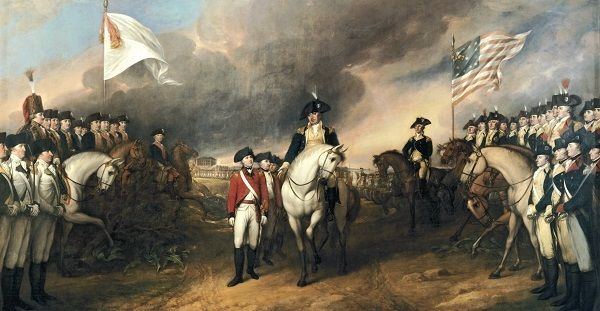
| 1781/10/19 | British General Lord Cornwallis surrenders at Yorktown, Virginia. |
| 1781/10/20 | General Washington offers his congratulations and thanks to his generals and army. |
| 1781/10/21 | General Washington orders religious services in honor of the victory over General Cornwallis. |
| 1781/12/31 | The Bank of North America is chartered. |
| Color Code | | International Diplomacy, Treaties, etc. | | Battles | | Naval Engagements | | Miscelaneous Highlights | | American Politics, Posturing, and Rioting | | British Politics, Posturing, and Rioting | | Military Milestones | | Native American Conflicts |
|
| 1782/1/22 | French navy captures Dutch colonies of Demerara and Essequibo which had been siezed by the British in 1781. |
| 1782/1/26 | The Battle of Saint Kitts off Bassaterre, Saint Kitts, between French and British fleets. |
| 1782/2/24 | The Battle of Wambaw Bridge, South Carolina. |
| 1782/2/27 | House of Commons votes to cease further war in the colonies. |
| 1782/2/27 | The French navy captures the island of Montserrat. |
| 1782/3/20 | Lord North resigns as British Prime Minister. |
| 1782/4/8 | The First Battle of Delaware Bay. Three American privateers escorting a fleet of merchantmen fight off an attack by 3 British warships. |
| 1782/4/9 | The Battle of the Saintes off Dominica between French and British fleets, lasts until 4/12. |
| 1782/4/19 | The Battle of the Mona Passage between British and French fleets in the Caribbean. |
| 1782/7/1 | American privateers attack Lunenburg, Nova Scotia. |
| 1782/7/11 | British evacuate Savannah, Georgia. |
| 1782/8/7 | George Washington establishes the Badge for Military Merit, a purple, silk heart with a silver lining. |
| 1782/8/8 | Hudson Bay Expedition. French navy raids Fort Prince of Wales and York Factory in the Hudson Bay. |
| 1782/8/16 | The Siege of Bryant’s Station, Kentucky, ends. |
| 1782/8/19 | The Battle of Blue Licks, Kentucky. Loyalists and Shawnee ambush militia from Bryant’s Station. |
| 1782/8/29 | The Battle of Fair Lawn, South Carolina. |
| 1782/9/5 | Naval action east of Long Island between two French ships and HMS Hector. |
| 1782/9/15 | The Second Battle of Delaware Bay between French and British fleets. |
| 1782/10/18 | The British give chase to two French ships off the coast of Hispaniola. French battleship Scipion comes around and causes severe damage to HMS London before fleeing again. The chase ends when Scipion runs aground and is destroyed. |
| 1782/11/14 | An ill-conceived skirmish on James Island, South Carolina, at the end of the war. General Francis Marion declined to participate and actually helped protect one party of British while they evacuated. |
| 1782/11/30 | Articles of Peace are signed by the British, a preliminary to ending the Revolution. |
| 1782/12/6 | Naval action off Martinique in which HMS Ruby captured the French ship Solitaire. |
| 1782/12/12 | The Battle of Ferrol, Spain, in which a single British ship defeats 5 American and French ships. |
| 1782/12/14 | British forces evacuate Charleston, South Carolina. |
| 1782/12/20 | The Battle of the Delaware Capes in which British navy captures three American ships. |
| 1783/1/22 | Naval action near Chesapeake Bay, in which the French ship Sybille is captured by HMS Hussar. |
| 1783/2/15 | A naval engagement off Guadalupe Island in the Caribbean, between a single French ship and a single British ship. |
| 1783/3/9 | Captain Horatio Nelson fails to retake the Turks and Caicos Islands from the French. |
| 1783/4/19 | Congress ratifies the Articles of Peace, a preliminary to the Paris treaties that officially ended the American Revolution. |
| 1783/6/8 | Washington gives advice, along with prayers for protection and domestic peace, to the newly victorious States. |
| 1783/9/3 | Treaty of Paris is signed by Britain and the USA, officially ending the American Revolution. |
| 1783/11/25 | British finally evacuate New York, New York. |
| 1783/12/4 | George Washington informs his officers of his formal resignation from command. |
| 1783/12/23 | George Washington resigns as Commander in Chief of the Continental Army. |
I was browsing through your site and, being a Marine, stopped to see if the birth of the USMC at Tun Tavern was on your timeline.
JOURNAL OF THE CONTINENTAL CONGRESS
(Philadelphia) Friday, November 10, 1775
Resolved, That two Battalions of marines be raised, consisting of one Colonel, two Lieutenant Colonels, two Majors, and other officers as usual in other regiments; and that they consist of an equal number of privates with other battalions; that particular care be taken, that no persons be appointed to office, or enlisted into said Battalions, but such as are good seamen, or so acquainted with maritime affairs as to be able to serve to advantage by sea when required; that they be enlisted and commissioned to serve for and during the present war between Great Britain and the colonies, unless dismissed by order of Congress: that they be distinguished by the names of the first and second battalions of American Marines, and that they be considered as part of the number which the continental Army before Boston is ordered to consist of.
Ordered, That a copy of the above be transmitted to the General.
Thanks, Aaron! I’ll be sure to include it in my next update.
…and updated!
Excellent! I read the whole thing through. This should be taught in the schools. Or at least someone could make an epic movie series showing the start and progression of the rebellion and war. Thank you for your work on this.
Doug Campbell
Hi, Kathy!
Awesome job! My hat is off to you, big-time!
I only gave it a cursory look, but here are two things:
1. There are two “l”s in “miscellaneous.”
2. On 1775/4/18-19, Dr. Samuel Prescott should be added. In fact, he is the only one of the three famous riders (including Paul Revere and William Dawes) who made it all the way to Concord to warn the inhabitants there!
I just checked out the end of 1776! You list the date of 1776/12/26 as when GW and the army crossed the Delaware, then fought the first Battle of Trenton.
The date should begin with Christmas day–1776/12/25–because the Crossing of the Delaware famously took place Christmas night, starting just after dark and continuing until the wee hours of the morning (into the 26th).
Thank you, Marlene! You are correct on both counts. I added Dr. Prescott to the Midnight Ride and modified both entries for the Battle of Trenton to clarify the timing and purpose of the crossing.
Keep the suggestions coming!